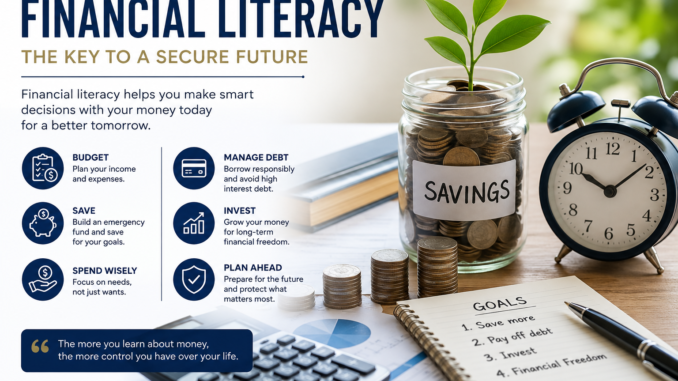
In today’s world, money affects almost every part of daily life. People need money for food, housing, education, healthcare, transportation, and future security. Yet many individuals work hard every day without fully understanding how money works. This is why financial literacy has become one of the most important life skills in modern society.
Financial literacy means having the knowledge and ability to manage money wisely. It includes understanding how to earn, save, spend, invest, borrow, and plan for the future. A financially literate person can make informed decisions about money and avoid common financial mistakes. This knowledge does not only help wealthy people. It is valuable for students, workers, business owners, and families at every income level.
One of the most basic parts of financial literacy is budgeting. A budget is a simple plan that shows how much money comes in and how much goes out. Many people spend money without tracking where it goes. As a result, they may face financial stress at the end of the month. A budget helps people control spending and prioritize important expenses. It also makes it easier to identify unnecessary spending habits. Even a small daily expense can become a large monthly cost if not carefully managed.
Saving money is another important part of financial literacy. Saving creates security and provides protection during emergencies. Unexpected situations such as medical problems, job loss, or urgent repairs can happen at any time. Without savings, people may need to borrow money or rely on others. Financial experts often encourage building an emergency fund that can cover several months of living expenses. This habit creates peace of mind and financial stability.
Financial literacy also teaches people the difference between needs and wants. Needs are essential things such as food, shelter, and healthcare. Wants are things that improve comfort or enjoyment but are not necessary for survival. In modern society, advertising and social media often encourage people to spend money on products they may not truly need. Financially educated people learn how to make thoughtful choices rather than emotional purchases.
Another important topic is debt management. Borrowing money can be useful in some situations, such as education, housing, or business development. However, borrowing without careful planning can create long-term problems. Credit cards, personal loans, and high-interest borrowing can become difficult to repay. Financial literacy helps people understand interest rates, repayment schedules, and the true cost of debt. This knowledge allows individuals to borrow responsibly and avoid financial pressure.
Understanding banking services is also part of financial literacy. Banks offer useful tools such as savings accounts, checking accounts, mobile banking, and money transfers. Knowing how these services work can help people manage money more safely and efficiently. Today, digital finance has become increasingly common. People use mobile apps, online payments, and digital wallets in everyday transactions. As technology continues to develop, financial knowledge becomes even more important.
Investment is another area where financial literacy plays a major role. Saving money helps protect the present, but investing can help build future wealth. Investments may include stocks, bonds, mutual funds, or small businesses. Many people avoid investing because they think it is too risky or too complicated. While investment always involves some level of risk, financial education helps people understand risk management, long-term planning, and diversification. With knowledge and patience, investing can become a powerful tool for financial growth.
Financial literacy is especially important for young people. Students who learn money management early in life often develop stronger habits in adulthood. Learning how to budget, save, and spend wisely can prevent future financial problems. Schools and families both have an important role in teaching these skills. Unfortunately, financial education is still limited in many places. As a result, many young adults enter the workforce without knowing how to manage income, debt, or savings.
Families also benefit greatly from financial literacy. Good financial planning helps parents manage household expenses, pay for education, and prepare for retirement. It can reduce stress and improve family stability. Open discussions about money can also teach children healthy financial habits. When families work together toward financial goals, they often build stronger security for the future.
For small business owners, financial literacy is essential for success. Running a business requires understanding income, expenses, profit, cash flow, taxes, and investment decisions. A business may have strong products or services but still fail because of poor financial management. Business owners who understand finance are better prepared to make smart decisions and adapt to challenges.
Financial literacy also contributes to economic development at the national level. When citizens understand money management, they tend to save more, borrow responsibly, and invest productively. This can strengthen financial institutions, reduce poverty, and support long-term economic growth. A financially educated population creates a stronger and more stable economy.
In recent years, the internet has made financial information more accessible than ever before. People can learn about budgeting, saving, investing, and entrepreneurship through online courses, videos, websites, and mobile applications. However, not all information online is reliable. Financial literacy also includes learning how to identify trustworthy sources and avoid scams, fraud, and misleading advice.
The good news is that financial literacy can be learned by anyone. It does not require advanced mathematics or professional training. Small daily habits can make a big difference. Tracking expenses, setting goals, saving regularly, and learning from trusted resources are practical ways to improve financial knowledge. Over time, these habits build confidence and financial independence.
In conclusion, financial literacy is a vital skill in modern life. It helps people manage money wisely, prepare for emergencies, avoid unnecessary debt, and plan for long-term success. Whether someone is a student, employee, parent, or business owner, financial knowledge provides valuable benefits. In a world where financial decisions shape the future, learning how money works is not just useful—it is essential.
Leave a Reply