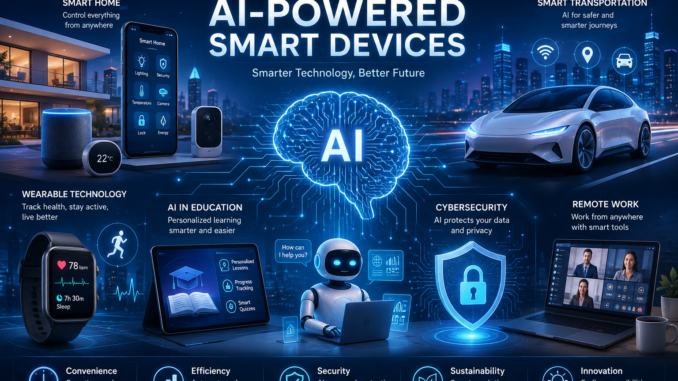
Technology is changing faster than ever, and 2026 is becoming a major turning point for smart devices powered by artificial intelligence. From smartphones and home assistants to wearable gadgets and smart cars, AI technology is transforming the way people live, work, and communicate. Businesses are also using these innovations to improve productivity, security, and customer experience.
The rapid growth of AI-powered technology is not only making life easier but also creating new opportunities in education, healthcare, online business, and entertainment. As internet access becomes more available worldwide, smart technology is becoming part of everyday life for millions of people.
Smarter Smartphones and Personal Assistants
Modern smartphones in 2026 are far more advanced than devices from just a few years ago. AI systems can now understand user behavior, predict preferences, and automate daily tasks. Smartphones can organize schedules, reply to messages, improve battery performance, and even create personalized content automatically.
Voice assistants have also become more intelligent. They can understand natural conversations better than before and provide accurate answers quickly. Many people now use AI assistants to control smart home devices, set reminders, search online information, and manage work tasks.
Camera technology is another area that has improved significantly. AI-powered cameras can automatically adjust lighting, remove unwanted objects from photos, and create professional-quality images without editing skills. This feature is especially useful for content creators, freelancers, and online business owners.
Smart Homes Are Becoming More Popular
Smart home technology continues to grow in popularity because it offers convenience, security, and energy savings. AI-powered smart homes allow users to control lights, air conditioners, TVs, doors, and security systems directly from their smartphones.
Many modern homes now include smart security cameras that can recognize faces and detect unusual activity. If suspicious movement is detected, the system sends instant alerts to the homeowner’s phone. This improves home security and provides peace of mind.
Energy efficiency is another major benefit. Smart systems can automatically reduce electricity usage by turning off devices when they are not needed. As energy prices continue to rise globally, many families are using smart technology to reduce monthly expenses.
Artificial Intelligence in Education
Technology is also transforming the education sector. AI-powered learning platforms are helping students study more effectively by creating personalized lessons based on individual performance. Students can learn at their own pace while teachers receive detailed progress reports.
Online learning has become more interactive in 2026. Virtual classrooms now use AI tools to improve communication between students and teachers. Some platforms even provide real-time language translation, making education accessible to people from different countries.
Educational apps powered by AI can identify weak areas in a student’s understanding and recommend targeted exercises. This personalized approach helps improve learning outcomes and keeps students motivated.
The Growth of Wearable Technology
Wearable technology is becoming smarter and more useful every year. Smartwatches and fitness trackers now offer advanced health monitoring features such as heart rate tracking, sleep analysis, stress detection, and blood oxygen measurement.
Some wearable devices can even detect early signs of health problems and recommend medical attention. This technology is helping people become more aware of their physical condition and encouraging healthier lifestyles.
Fitness apps connected to wearable devices can create customized workout plans based on a user’s activity level and goals. As health awareness increases globally, wearable technology is expected to become even more important in the future.
Smart Cars and Transportation
The transportation industry is also experiencing major technological changes. Smart vehicles equipped with AI systems are improving road safety and driving comfort. Many modern cars now include features such as automatic parking, voice control, collision detection, and driver assistance systems.
Electric vehicles are becoming more common due to environmental concerns and rising fuel prices. AI technology helps optimize battery performance and improve energy efficiency in electric cars.
Some companies are also testing self-driving vehicles in selected cities. Although fully autonomous transportation is still developing, the technology is improving rapidly and may become more widely available in the coming years.
Cybersecurity and Data Protection
As technology becomes more advanced, cybersecurity is becoming increasingly important. Millions of people now store personal and financial information online, making data protection a top priority for businesses and governments.
AI-powered cybersecurity systems can detect suspicious activity faster than traditional security software. These systems analyze patterns and identify potential threats before they cause damage.
Many companies are investing heavily in digital security to protect customer information and maintain trust. Users are also becoming more aware of online privacy and using stronger passwords, two-factor authentication, and encrypted communication tools.
Technology and Remote Work
Remote work continues to grow in popularity in 2026, supported by modern communication technology. Video conferencing platforms, cloud storage systems, and AI productivity tools allow employees to work efficiently from almost anywhere.
Businesses are using AI to automate repetitive tasks, schedule meetings, and improve workflow management. This saves time and increases productivity for teams working remotely.
Freelancers and online entrepreneurs are also benefiting from these technological advancements. With internet access and digital tools, many people can now earn income online through content creation, graphic design, programming, and digital marketing.
The Future of Technology
The future of technology looks incredibly promising. Innovations in artificial intelligence, robotics, virtual reality, and cloud computing will continue to change industries and create new opportunities worldwide.
However, technology also brings challenges such as privacy concerns, cybersecurity risks, and the need for digital education. Governments, businesses, and individuals must work together to ensure that technology is used responsibly and safely.
In the coming years, smart technology will likely become even more integrated into everyday life. From healthcare and education to transportation and entertainment, AI-powered systems will continue to improve convenience, efficiency, and communication.
Conclusion
Technology in 2026 is advancing at an extraordinary pace, driven largely by artificial intelligence and smart devices. These innovations are making daily life more convenient while opening new possibilities for businesses, students, and online workers.
Smart homes, wearable gadgets, AI education platforms, and intelligent transportation systems are just a few examples of how technology is shaping the future. As digital transformation continues, people who adapt to new technology will have greater opportunities for success in both personal and professional life.
The world is entering a new era of innovation where smart technology is no longer optional but an essential part of modern living.


Leave a Reply