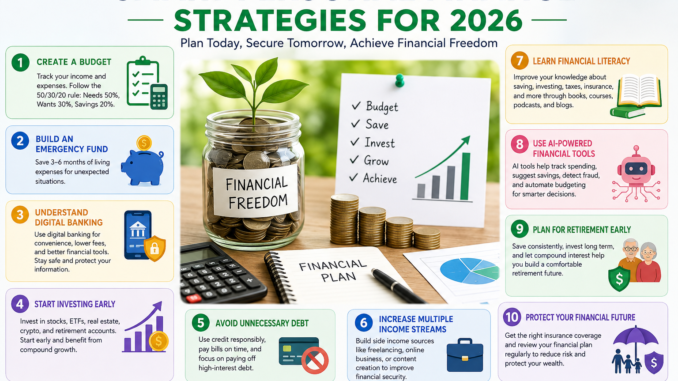
Managing money wisely has become more important than ever in 2026. With rising living costs, digital banking, online investments, and new financial technologies, people around the world are searching for better ways to save, invest, and build long-term wealth. Whether you are a student, freelancer, employee, or business owner, understanding personal finance can help you achieve financial freedom and reduce stress.
In this article, we will explore smart personal finance strategies that can help individuals improve their financial future in 2026.
1. Create a Monthly Budget
A monthly budget is the foundation of financial success. Without tracking income and expenses, it becomes difficult to control spending and save money effectively.
Start by listing:
- Monthly income
- Essential expenses
- Savings goals
- Entertainment spending
- Emergency funds
Many people now use mobile budgeting apps to manage their finances easily. These apps automatically track transactions and help users identify unnecessary spending habits.
A simple budgeting rule that still works in 2026 is the 50/30/20 rule:
- 50% for needs
- 30% for wants
- 20% for savings and investments
Following a budget consistently can improve financial stability over time.
2. Build an Emergency Fund
Unexpected situations such as medical emergencies, job loss, or economic downturns can affect anyone. That is why building an emergency fund is essential.
Financial experts recommend saving at least 3 to 6 months of living expenses in a separate savings account. This fund should only be used for emergencies.
Benefits of having an emergency fund include:
- Reduced financial stress
- Protection from debt
- Better financial security
- Peace of mind
Even small monthly contributions can grow significantly over time.
3. Understand Digital Banking
Digital banking continues to grow rapidly in 2026. Many people now prefer online banks because they offer:
- Lower fees
- Faster transactions
- Mobile banking access
- High-interest savings accounts
- Better financial tools
Online banking apps also provide real-time notifications, spending analysis, and automated savings options.
However, users should prioritize cybersecurity by:
- Using strong passwords
- Enabling two-factor authentication
- Avoiding suspicious links
- Updating banking apps regularly
Digital finance offers convenience, but financial safety should always come first.
4. Start Investing Early
Investing is one of the most effective ways to grow wealth over time. In 2026, investment opportunities are more accessible than ever through online platforms and mobile apps.
Popular investment options include:
Stocks
Buying shares of companies allows investors to benefit from long-term business growth.
ETFs (Exchange-Traded Funds)
ETFs provide diversification and lower risk compared to individual stocks.
Real Estate
Property investment remains a strong long-term wealth-building strategy.
Cryptocurrency
Digital assets continue to attract investors, although they remain highly volatile.
Retirement Accounts
Long-term retirement investing helps individuals secure their future financial stability.
Starting early allows investors to benefit from compound growth, where earnings generate additional earnings over time.
5. Avoid Unnecessary Debt
Debt can become a major financial burden if not managed properly. Credit card debt, personal loans, and high-interest borrowing can damage long-term financial health.
To reduce debt effectively:
- Pay bills on time
- Avoid impulsive purchases
- Use credit responsibly
- Focus on high-interest debt first
- Limit unnecessary borrowing
Many financial experts recommend using debt only for valuable investments such as education, business, or property.
Responsible debt management improves credit scores and financial flexibility.
6. Increase Multiple Income Streams
In today’s economy, relying on a single income source can be risky. Many people in 2026 are creating multiple income streams to improve financial security.
Popular side income ideas include:
- Freelancing
- Affiliate marketing
- Blogging
- YouTube content creation
- Online selling
- Stock photography
- Digital product sales
Technology has made online earning easier than ever before. Even a small side income can support savings and investment goals.
Diversifying income sources also helps protect individuals during economic uncertainty.
7. Learn Financial Literacy
Financial literacy is the ability to understand and manage money effectively. Unfortunately, many people still lack basic financial knowledge.
Important financial topics include:
- Saving
- Investing
- Taxes
- Credit scores
- Insurance
- Retirement planning
- Risk management
Free financial education is widely available through:
- YouTube channels
- Podcasts
- Online courses
- Finance blogs
- Educational apps
Improving financial literacy helps people make smarter money decisions and avoid costly mistakes.
8. Use AI-Powered Financial Tools
Artificial intelligence is changing the finance industry in 2026. AI-powered apps can now help users:
- Track spending
- Suggest savings goals
- Detect fraud
- Analyze investments
- Automate budgeting
Robo-advisors are also becoming popular because they provide low-cost investment management services.
AI technology helps users make better financial decisions quickly and efficiently.
9. Plan for Retirement Early
Retirement planning should not be delayed. The earlier people start saving for retirement, the better their future financial situation becomes.
Key retirement planning tips include:
- Contribute consistently
- Invest long term
- Avoid early withdrawals
- Diversify investments
- Increase savings gradually
Even small retirement contributions made consistently over many years can grow into substantial wealth.
Financial independence in retirement requires discipline and long-term planning.
10. Protect Your Financial Future
Financial protection is just as important as wealth building. Insurance plays a major role in reducing financial risk.
Important types of insurance include:
- Health insurance
- Life insurance
- Vehicle insurance
- Property insurance
- Business insurance
Insurance can prevent major financial losses during emergencies or accidents.
In addition, individuals should regularly review their financial goals and adjust strategies based on changing economic conditions.
Conclusion
Personal finance management in 2026 requires smart planning, discipline, and continuous learning. By creating a budget, saving consistently, investing wisely, reducing debt, and improving financial literacy, individuals can build a stronger financial future.
Technology has made financial tools more accessible than ever, allowing people to manage money efficiently from their smartphones. However, financial success still depends on good habits and informed decision-making.
No matter your current financial situation, small positive changes today can lead to long-term financial stability and freedom in the future.
Managing money wisely has become more important than ever in 2026. With rising living costs, digital banking, online investments, and new financial technologies, people around the world are searching for better ways to save, invest, and build long-term wealth. Whether you are a student, freelancer, employee, or business owner, understanding personal finance can help you achieve financial freedom and reduce stress.
In this article, we will explore smart personal finance strategies that can help individuals improve their financial future in 2026.
—
1. Create a Monthly Budget
A monthly budget is the foundation of financial success. Without tracking income and expenses, it becomes difficult to control spending and save money effectively.
Start by listing:
Monthly income
Essential expenses
Savings goals
Entertainment spending
Emergency funds
Many people now use mobile budgeting apps to manage their finances easily. These apps automatically track transactions and help users identify unnecessary spending habits.
A simple budgeting rule that still works in 2026 is the 50/30/20 rule:
50% for needs
30% for wants
20% for savings and investments
Following a budget consistently can improve financial stability over time.
—
2. Build an Emergency Fund
Unexpected situations such as medical emergencies, job loss, or economic downturns can affect anyone. That is why building an emergency fund is essential.
Financial experts recommend saving at least 3 to 6 months of living expenses in a separate savings account. This fund should only be used for emergencies.
Benefits of having an emergency fund include:
Reduced financial stress
Protection from debt
Better financial security
Peace of mind
Even small monthly contributions can grow significantly over time.
—
3. Understand Digital Banking
Digital banking continues to grow rapidly in 2026. Many people now prefer online banks because they offer:
Lower fees
Faster transactions
Mobile banking access
High-interest savings accounts
Better financial tools
Online banking apps also provide real-time notifications, spending analysis, and automated savings options.
However, users should prioritize cybersecurity by:
Using strong passwords
Enabling two-factor authentication
Avoiding suspicious links
Updating banking apps regularly
Digital finance offers convenience, but financial safety should always come first.
—
4. Start Investing Early
Investing is one of the most effective ways to grow wealth over time. In 2026, investment opportunities are more accessible than ever through online platforms and mobile apps.
Popular investment options include:
Stocks
Buying shares of companies allows investors to benefit from long-term business growth.
ETFs (Exchange-Traded Funds)
ETFs provide diversification and lower risk compared to individual stocks.
Real Estate
Property investment remains a strong long-term wealth-building strategy.
Cryptocurrency
Digital assets continue to attract investors, although they remain highly volatile.
Retirement Accounts
Long-term retirement investing helps individuals secure their future financial stability.
Starting early allows investors to benefit from compound growth, where earnings generate additional earnings over time.
—
5. Avoid Unnecessary Debt
Debt can become a major financial burden if not managed properly. Credit card debt, personal loans, and high-interest borrowing can damage long-term financial health.
To reduce debt effectively:
Pay bills on time
Avoid impulsive purchases
Use credit responsibly
Focus on high-interest debt first
Limit unnecessary borrowing
Many financial experts recommend using debt only for valuable investments such as education, business, or property.
Responsible debt management improves credit scores and financial flexibility.
—
6. Increase Multiple Income Streams
In today’s economy, relying on a single income source can be risky. Many people in 2026 are creating multiple income streams to improve financial security.
Popular side income ideas include:
Freelancing
Affiliate marketing
Blogging
YouTube content creation
Online selling
Stock photography
Digital product sales
Technology has made online earning easier than ever before. Even a small side income can support savings and investment goals.
Diversifying income sources also helps protect individuals during economic uncertainty.
—
7. Learn Financial Literacy
Financial literacy is the ability to understand and manage money effectively. Unfortunately, many people still lack basic financial knowledge.
Important financial topics include:
Saving
Investing
Taxes
Credit scores
Insurance
Retirement planning
Risk management
Free financial education is widely available through:
YouTube channels
Podcasts
Online courses
Finance blogs
Educational apps
Improving financial literacy helps people make smarter money decisions and avoid costly mistakes.
—
8. Use AI-Powered Financial Tools
Artificial intelligence is changing the finance industry in 2026. AI-powered apps can now help users:
Track spending
Suggest savings goals
Detect fraud
Analyze investments
Automate budgeting
Robo-advisors are also becoming popular because they provide low-cost investment management services.
AI technology helps users make better financial decisions quickly and efficiently.
—
9. Plan for Retirement Early
Retirement planning should not be delayed. The earlier people start saving for retirement, the better their future financial situation becomes.
Key retirement planning tips include:
Contribute consistently
Invest long term
Avoid early withdrawals
Diversify investments
Increase savings gradually
Even small retirement contributions made consistently over many years can grow into substantial wealth.
Financial independence in retirement requires discipline and long-term planning.
—
10. Protect Your Financial Future
Financial protection is just as important as wealth building. Insurance plays a major role in reducing financial risk.
Important types of insurance include:
Health insurance
Life insurance
Vehicle insurance
Property insurance
Business insurance
Insurance can prevent major financial losses during emergencies or accidents.
In addition, individuals should regularly review their financial goals and adjust strategies based on changing economic conditions.
—
Conclusion
Personal finance management in 2026 requires smart planning, discipline, and continuous learning. By creating a budget, saving consistently, investing wisely, reducing debt, and improving financial literacy, individuals can build a stronger financial future.
Technology has made financial tools more accessible than ever, allowing people to manage money efficiently from their smartphones. However, financial success still depends on good habits and informed decision-making.
No matter your current financial situation, small positive changes today can lead to long-term financial stability and freedom in the future.
Leave a Reply