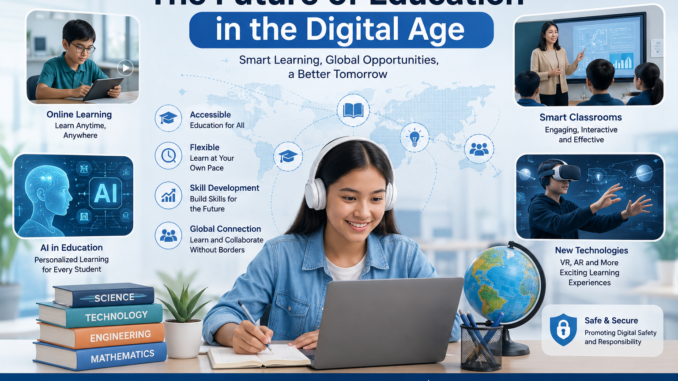
Education has changed dramatically over the last decade. Technology, internet access, and digital tools have transformed the way students learn and teachers teach. In 2026, education is no longer limited to classrooms and textbooks. Students can now attend online classes, access global learning resources, and improve their skills from anywhere in the world. The digital age has opened new opportunities for learners of all ages and backgrounds.
One of the biggest advantages of modern education is accessibility. In the past, many students in rural or remote areas had limited access to quality education. Today, with smartphones and internet connections becoming more affordable, millions of students can join online learning platforms. Websites and apps such as Coursera, Khan Academy, Udemy, and YouTube provide free or affordable educational content. This allows people to learn new skills without spending large amounts of money.
Online learning has also made education more flexible. Traditional education often requires students to follow strict schedules. However, digital learning platforms allow students to study at their own pace. A working adult can learn graphic design at night, while a university student can improve coding skills during weekends. This flexibility is especially helpful for people who want to balance education with work or family responsibilities.
Another important development is the rise of artificial intelligence in education. AI-powered tools can personalize learning experiences based on a student’s strengths and weaknesses. For example, language-learning apps can track pronunciation and provide instant feedback. Mathematics platforms can recommend exercises based on previous mistakes. This personalized approach helps students learn more effectively and improves overall academic performance.
Virtual classrooms have become a common part of education systems worldwide. Video conferencing tools such as Zoom and Google Meet allow teachers and students to interact in real time. During global challenges like the COVID-19 pandemic, online education helped millions of students continue their studies from home. Even after schools reopened, many institutions continued using hybrid learning models that combine online and offline education.
Digital education also encourages skill development beyond academic subjects. Students today can learn practical skills such as video editing, programming, digital marketing, and financial management online. These skills are highly valuable in modern job markets. Many employers now focus on practical abilities and certifications rather than traditional degrees alone. As a result, online courses and digital certifications have become increasingly popular.
The use of educational technology in classrooms is improving student engagement. Interactive whiteboards, educational games, animations, and virtual reality experiences make lessons more interesting and enjoyable. Instead of only reading from textbooks, students can watch science experiments in 3D or explore historical places through virtual tours. These interactive methods help students understand complex topics more easily.
Teachers also benefit from digital transformation in education. Online tools help teachers organize lessons, track student performance, and communicate with parents more efficiently. Automated grading systems reduce workload, allowing teachers to spend more time helping students individually. Educational technology supports better classroom management and creates more opportunities for creative teaching methods.
Despite its many advantages, digital education also faces several challenges. One major issue is the digital divide. Not all students have access to reliable internet connections or modern devices. In developing countries, some families cannot afford smartphones, laptops, or monthly internet costs. This creates inequality in educational opportunities. Governments and organizations must work together to improve internet infrastructure and provide affordable digital access for all students.
Another challenge is maintaining student focus during online learning. Social media, gaming, and entertainment websites can easily distract students during virtual classes. Without proper discipline and guidance, some learners may struggle to stay motivated. Parents and teachers play an important role in helping students develop healthy study habits and time management skills.
Cybersecurity and online safety are also important concerns. Students and teachers use many digital platforms that collect personal information. Educational institutions must ensure that online systems are secure and protect user privacy. Teaching students about internet safety and responsible online behavior is becoming an essential part of modern education.
Mental health is another topic receiving more attention in education systems. Excessive screen time and lack of physical interaction can affect students emotionally and socially. Schools should encourage balanced learning approaches that include physical activities, group discussions, and face-to-face communication whenever possible. Technology should support education, not replace human connection completely.
The future of education will likely become even more technology-driven. Artificial intelligence, virtual reality, and augmented reality are expected to play bigger roles in classrooms. Students may attend virtual science labs, explore space simulations, or participate in global collaborative projects with classmates from different countries. These innovations can make learning more engaging and effective.
At the same time, traditional educational values remain important. Critical thinking, creativity, communication, and emotional intelligence are skills that technology alone cannot fully replace. Teachers will continue to play a vital role in guiding students, building confidence, and encouraging personal growth. The combination of human support and digital innovation can create powerful learning experiences.
In conclusion, education in the digital age offers incredible opportunities for students and teachers around the world. Online learning, artificial intelligence, and educational technology are making education more accessible, flexible, and engaging. While challenges such as internet access, distractions, and online safety still exist, the future of education looks promising. By combining technology with effective teaching methods, societies can create better learning systems that prepare students for the demands of the modern world.
Leave a Reply