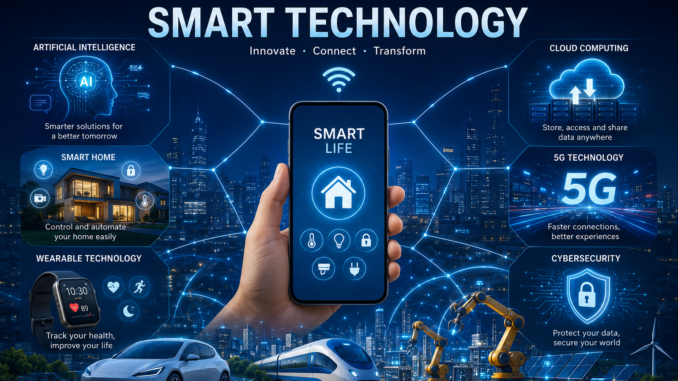
Technology is changing the way people live, work, and communicate. In 2026, smart technology has become an important part of daily life for millions of people around the world. From artificial intelligence to smart homes and wearable devices, modern innovations are making life faster, easier, and more connected than ever before. Businesses, students, and even families now rely on technology for communication, entertainment, education, and productivity.
In this article, we will explore how smart technology is shaping everyday life, the benefits it offers, and what we can expect in the future.
The Rise of Artificial Intelligence
Artificial Intelligence (AI) is one of the most important technologies today. AI allows computers and machines to learn from data and perform tasks that usually require human intelligence. Many popular apps and services already use AI in different ways.
For example, voice assistants like Google Assistant, Siri, and Alexa help users search the internet, play music, and manage schedules. AI is also used in customer service chatbots, online shopping recommendations, and social media algorithms.
Businesses use AI to improve efficiency and reduce costs. In healthcare, AI helps doctors analyze medical reports and detect diseases more accurately. In education, AI-powered learning platforms provide personalized lessons for students based on their learning speed and performance.
As AI technology continues to improve, it will become even more useful in daily life.
Smart Homes Are Becoming More Popular
Smart homes are another major trend in modern technology. A smart home uses internet-connected devices to control appliances and systems automatically. These devices can include smart lights, smart TVs, smart security cameras, and smart thermostats.
Many people prefer smart homes because they provide convenience and save energy. For example, smart lights can turn off automatically when nobody is in the room. Smart security systems allow homeowners to monitor their property using smartphones from anywhere in the world.
Voice control technology has also made smart homes easier to use. Users can control devices simply by speaking commands. This technology is especially useful for elderly people and individuals with disabilities.
In the future, smart homes may become fully automated, where devices communicate with each other without human interaction.
Wearable Technology and Health Monitoring
Wearable technology has grown rapidly in recent years. Smartwatches and fitness trackers are now common devices used by people of all ages. These gadgets help users monitor their health and fitness activities.
Modern wearable devices can track heart rate, sleep quality, daily steps, blood oxygen levels, and calories burned. Some advanced smartwatches can even detect irregular heartbeats and send emergency alerts during accidents.
Health experts believe wearable technology will play a bigger role in preventive healthcare. Instead of waiting until people become sick, smart devices can help identify health problems early.
Many companies are also developing wearable devices for virtual reality (VR) and augmented reality (AR). These technologies may transform gaming, online learning, and digital communication in the coming years.
The Growth of Cloud Computing
Cloud computing is another important part of modern technology. It allows users to store files and access software through the internet instead of relying on physical devices.
Popular cloud services like Google Drive, Dropbox, and Microsoft OneDrive help people store documents, photos, and videos securely online. Businesses use cloud computing to manage remote teams and improve collaboration.
One major advantage of cloud technology is flexibility. Employees can work from anywhere using laptops or smartphones. This became especially important during the global pandemic when remote work increased worldwide.
Cloud computing also helps companies reduce hardware costs and improve data security. As internet speeds continue to improve, cloud services will become even faster and more reliable.
Cybersecurity Is More Important Than Ever
As technology grows, cybersecurity becomes increasingly important. People now use digital platforms for banking, shopping, communication, and entertainment. Because of this, protecting personal information is essential.
Cybercriminals use phishing scams, malware, and hacking techniques to steal sensitive data. To stay safe online, users should create strong passwords, enable two-factor authentication, and avoid suspicious links.
Businesses also invest heavily in cybersecurity systems to protect customer information and company databases. Governments around the world are creating new laws and regulations to improve digital safety.
In the future, AI-based cybersecurity systems may help detect threats automatically before they cause damage.
The Impact of 5G Technology
5G technology is transforming internet connectivity. Compared to older networks, 5G offers much faster download speeds, lower latency, and better performance for connected devices.
This technology supports innovations such as self-driving cars, smart cities, online gaming, and high-quality video streaming. Faster internet also improves remote work and online education experiences.
For businesses, 5G creates opportunities for automation and real-time communication. Factories can use smart machines connected through high-speed networks to improve production efficiency.
As more countries expand 5G infrastructure, internet access will become more powerful and reliable for users everywhere.
Technology in Education
Technology has changed the education system significantly. Online learning platforms allow students to study from home using computers and mobile devices.
Digital classrooms provide access to educational videos, virtual lessons, and interactive learning tools. Students can learn at their own pace while teachers use technology to track academic progress.
AI-powered tutoring systems are also becoming popular. These systems identify students’ strengths and weaknesses and provide personalized recommendations.
In developing countries, technology helps improve access to education for students living in remote areas. With internet access and affordable smartphones, more people can now learn valuable skills online.
The Future of Smart Technology
The future of technology looks exciting. Experts believe AI, robotics, and automation will continue to improve industries such as healthcare, transportation, finance, and education.
Smart cities may use connected systems to manage traffic, reduce pollution, and improve public safety. Electric vehicles and renewable energy technologies will also become more common as countries focus on sustainability.
However, technology also brings challenges such as privacy concerns and job automation. Governments and companies must work together to ensure technology is used responsibly and ethically.
Despite these challenges, smart technology will continue to create new opportunities and improve quality of life for people around the world.
Conclusion
Technology is now deeply connected to modern life. From AI and smart homes to wearable devices and cloud computing, digital innovation is transforming the world at a rapid pace. These technologies provide convenience, improve productivity, and create better opportunities for businesses and individuals alike.
As technology continues to evolve, it is important for people to stay informed and adapt to new digital trends. The future will likely bring even more advanced solutions that make life smarter, safer, and more connected than ever before.
Leave a Reply