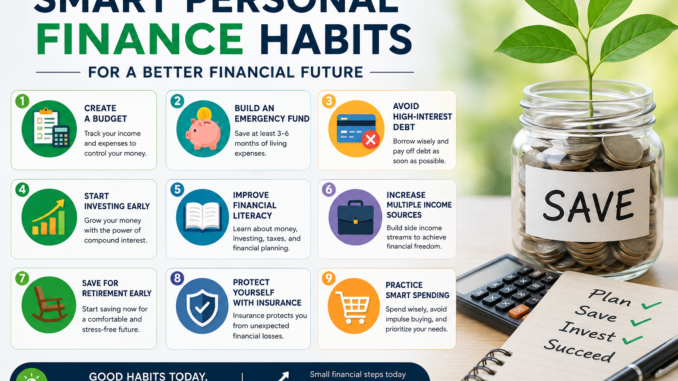
Managing money wisely has become more important than ever in 2026. Rising living costs, digital banking, online shopping, and investment opportunities have changed the way people handle their finances. Whether you are a student, freelancer, employee, or business owner, building strong personal finance habits can help you achieve long-term financial stability and reduce stress.
Personal finance is not only about saving money. It also includes budgeting, investing, reducing debt, planning for emergencies, and making smart financial decisions every day. In this article, we will explore practical and effective personal finance habits that can improve your financial future.
1. Create a Monthly Budget
A budget is the foundation of good financial management. Without a budget, it is easy to spend more than you earn. A monthly budget helps you track your income and expenses so you can control your finances more effectively.
Start by listing your total monthly income. Then write down all your expenses, including rent, food, transportation, bills, and entertainment. Divide your spending into categories and identify areas where you can reduce unnecessary expenses.
Many people use budgeting apps because they make tracking expenses simple and convenient. Popular finance apps can help you monitor spending habits, save automatically, and manage bills on time.
Benefits of budgeting include:
Better control over spending
Reduced financial stress
Increased savings
Improved financial discipline
2. Build an Emergency Fund
Unexpected expenses can happen at any time. Medical emergencies, car repairs, job loss, or sudden family expenses can create financial problems if you are not prepared.
An emergency fund is money set aside specifically for unexpected situations. Financial experts recommend saving at least three to six months of living expenses. Even if you cannot save a large amount immediately, starting small is still helpful.
You can begin by saving a fixed percentage of your income every month. Keeping your emergency fund in a separate savings account can prevent unnecessary spending.
An emergency fund provides:
Financial security
Peace of mind
Protection from debt
Better financial confidence
3. Avoid High-Interest Debt
Debt can become a serious financial burden when not managed properly. Credit cards, payday loans, and personal loans often come with high interest rates that can grow quickly over time.
To avoid financial problems, only borrow money when necessary and always understand the repayment terms before taking a loan. Paying bills on time can also help protect your credit score and avoid extra charges.
If you already have debt, focus on paying off high-interest balances first. Many people use the debt snowball or debt avalanche method to become debt-free faster.
Smart debt management tips include:
Avoid unnecessary borrowing
Pay more than the minimum payment
Track loan repayment dates
Limit credit card usage
4. Start Investing Early
Investing is one of the most effective ways to build long-term wealth. Many people believe investing is only for wealthy individuals, but anyone can start with small amounts.
Modern investment platforms allow beginners to invest in stocks, ETFs, cryptocurrencies, mutual funds, and real estate with low starting capital. The earlier you start investing, the more time your money has to grow through compound interest.
Before investing, it is important to learn basic investment concepts and understand the risks involved. Diversifying your investments can reduce financial risk and improve stability.
Popular investment options in 2026 include:
Stock market investments
Index funds
Cryptocurrency assets
Real estate investment
Retirement accounts
5. Improve Financial Literacy
Financial literacy means understanding how money works. People with strong financial knowledge are more likely to make smart financial decisions and avoid scams or unnecessary debt.
You can improve financial literacy by reading finance blogs, watching educational videos, listening to podcasts, or taking online courses. Learning about saving, investing, taxes, insurance, and retirement planning can help you manage money more effectively.
Key financial topics to learn include:
Budgeting strategies
Investment basics
Credit score management
Tax planning
Retirement savings
The more knowledge you gain, the more confident you become in making financial decisions.
6. Increase Multiple Income Sources
Relying on a single income source can be risky in today’s economy. Many people are now creating additional income streams to improve financial security.
Side hustles and online income opportunities have become more accessible than ever. Freelancing, affiliate marketing, content creation, online selling, and remote work are popular ways to earn extra money.
Additional income can help you:
Save faster
Invest more money
Pay off debt
Achieve financial freedom
Even a small side income can make a big difference over time.
7. Save for Retirement Early
Retirement planning is often ignored by young adults, but starting early can provide major financial advantages. Small monthly retirement contributions can grow significantly over several decades.
Retirement accounts and long-term investment plans help secure your future lifestyle. The earlier you begin saving, the less pressure you may face later in life.
Retirement planning benefits include:
Financial independence
Reduced stress during retirement
Long-term wealth growth
Better future stability
8. Protect Yourself with Insurance
Insurance is an important part of financial planning. Medical emergencies, accidents, or property damage can create major financial losses.
Health insurance, life insurance, and property insurance can provide protection against unexpected expenses. Choosing the right insurance coverage can prevent serious financial difficulties in the future.
When selecting insurance, compare different providers, coverage options, and pricing to find the best solution for your needs.
9. Practice Smart Spending Habits
Smart spending does not mean avoiding all enjoyment. It means spending money carefully and prioritizing value over impulse buying.
Before making purchases, ask yourself whether the item is necessary or simply a temporary desire. Comparing prices, using discounts, and avoiding emotional spending can help save a large amount of money over time.
Simple spending habits that save money include:
Cooking at home more often
Canceling unused subscriptions
Buying during sales
Avoiding unnecessary luxury purchases
Small changes in daily habits can create significant financial improvements.
Conclusion
Personal finance management is a lifelong journey that requires discipline, planning, and continuous learning. Building good financial habits today can lead to a more stable and successful future.
Creating a budget, saving regularly, avoiding high-interest debt, investing early, and improving financial literacy are essential steps toward financial freedom. In today’s digital economy, anyone can take control of their finances and build long-term wealth with the right strategies.
No matter your current financial situation, starting with small positive actions can create powerful results over time. Smart financial decisions today can help you achieve greater security, confidence, and independence in the future.
Leave a Reply