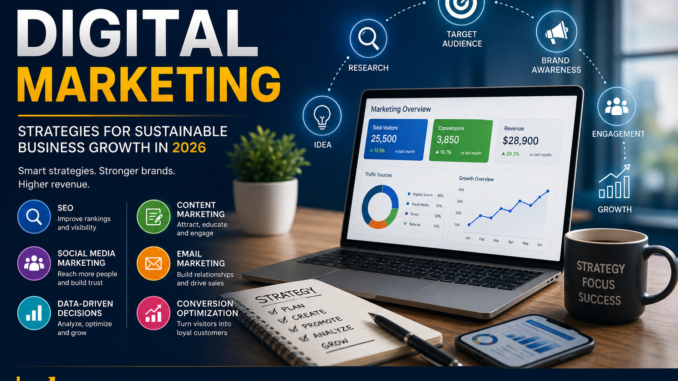
In today’s fast-evolving digital landscape, businesses must adopt smart, data-driven marketing strategies to remain competitive and profitable. Whether you are running a small online store, a blog monetized with ads, or a large-scale eCommerce platform, understanding how to attract, engage, and convert audiences is essential. This article explores high-impact digital marketing strategies that can help businesses achieve sustainable growth and maximize revenue in 2026 and beyond.
1. Understanding Your Target Audience
The foundation of any successful marketing strategy starts with understanding your target audience. Without clear audience insights, even the most creative campaigns will fail to deliver results.
Businesses should analyze:
Demographics (age, gender, location)
Interests and behavior
Purchasing patterns
Online activity and preferred platforms
Using tools like analytics dashboards and customer feedback, you can create detailed buyer personas. These personas help tailor your content, advertisements, and offers to meet the exact needs of your audience, increasing engagement and conversions.
2. Content Marketing: The Core of Digital Success
Content marketing remains one of the most powerful tools for driving organic traffic and building trust. High-quality, valuable content not only improves search engine rankings but also establishes authority in your niche.
Effective content types include:
Blog posts (SEO optimized)
Educational guides
Product reviews
Case studies
Video content
For maximum impact, focus on solving problems for your audience rather than simply promoting products. Search engines prioritize helpful, informative content, which leads to higher rankings and better monetization opportunities.
3. Search Engine Optimization (SEO)
SEO is critical for long-term visibility and consistent traffic. By optimizing your website and content for search engines, you can attract users who are actively searching for your products or services.
Key SEO strategies include:
Keyword research with high CPC (Cost Per Click) terms
On-page optimization (titles, meta descriptions, headers)
Fast-loading website performance
Mobile-friendly design
High-quality backlinks
For websites targeting higher ad revenue (such as AdSense), focusing on high-value keywords like finance, insurance, technology, and business can significantly increase eCPM rates.
4. Leveraging Social Media Marketing
Social media platforms offer massive opportunities for brand exposure and customer engagement. However, success requires more than just posting regularly.
Best practices include:
Creating platform-specific content (short videos, reels, stories)
Engaging with comments and messages
Collaborating with influencers
Running targeted ad campaigns
Platforms like Facebook, TikTok, and YouTube are especially powerful for driving traffic to websites. Short-form video content is currently one of the most effective formats for reaching large audiences quickly.
5. Email Marketing for High ROI
Email marketing continues to deliver one of the highest returns on investment (ROI) in digital marketing. Building an email list allows businesses to communicate directly with their audience without relying on algorithms.
Effective email strategies include:
Personalized content
Automated email sequences
Promotional campaigns
Newsletters with valuable insights
A strong email list can drive repeat traffic, increase conversions, and build long-term customer relationships.
6. Conversion Rate Optimization (CRO)
Driving traffic is important, but converting that traffic into revenue is the ultimate goal. Conversion Rate Optimization focuses on improving the user experience to increase the percentage of visitors who take action.
Key CRO techniques include:
Clear call-to-action (CTA) buttons
Fast-loading pages
Simple navigation
Trust signals (reviews, testimonials)
A/B testing different layouts
Even small improvements in conversion rates can lead to significant increases in revenue over time.
7. Data-Driven Marketing Decisions
Modern marketing relies heavily on data analysis. Businesses that track and analyze performance metrics can make informed decisions and continuously improve their strategies.
Important metrics to monitor:
Website traffic sources
Bounce rate
Average session duration
Conversion rates
Revenue per user
Using analytics tools, you can identify what works and what doesn’t, allowing you to allocate resources more effectively.
8. Monetization Strategies for Websites
For website owners, especially those using ad networks, choosing the right monetization strategy is crucial.
Popular monetization methods include:
Display advertising (high eCPM niches)
Affiliate marketing
Sponsored content
Selling digital products
Combining multiple income streams can significantly increase overall earnings. For example, a blog can generate revenue through ads while also promoting affiliate products.
9. The Importance of Mobile Optimization
With the majority of internet users accessing content via smartphones, mobile optimization is no longer optional. A mobile-friendly website improves user experience and boosts search rankings.
Ensure your site:
Loads quickly on mobile devices
Has responsive design
Uses readable fonts and layouts
Minimizes intrusive pop-ups
A poor mobile experience can result in high bounce rates and lost revenue opportunities.
10. Building Brand Trust and Authority
Trust plays a critical role in customer decision-making. Businesses that establish credibility are more likely to retain customers and generate repeat sales.
Ways to build trust include:
Publishing accurate and helpful content
Displaying customer reviews
Maintaining transparency
Providing excellent customer support
Consistency in branding and messaging also helps create a strong identity that customers can recognize and trust.
Conclusion
Digital marketing in 2026 is more competitive than ever, but it also offers unprecedented opportunities for growth. By focusing on audience understanding, high-quality content, SEO, social media engagement, and data-driven strategies, businesses can achieve sustainable success.
For website owners aiming to maximize ad revenue, targeting high-value niches, optimizing content for search engines, and improving user experience are key factors in increasing eCPM and overall earnings.
Success in digital marketing does not happen overnight. It requires continuous learning, testing, and adaptation. However, with the right strategies in place, any business can build a strong online presence and generate consistent income in today’s digital economy.
Leave a Reply