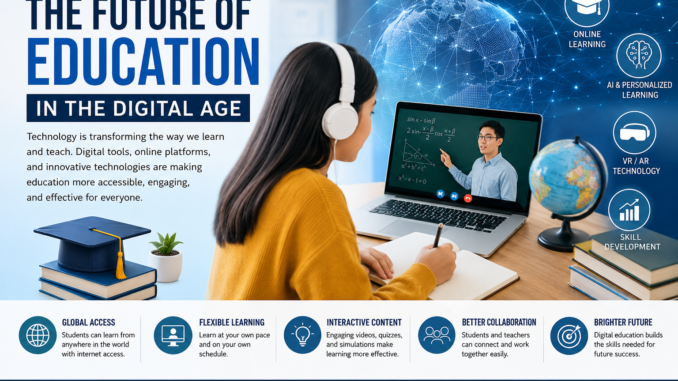
Education has changed dramatically over the last decade. Technology, internet access, and digital tools have transformed the way students learn and teachers teach. In 2026, education is no longer limited to classrooms and textbooks. Students can now learn from anywhere in the world using smartphones, tablets, and computers. This digital transformation is creating new opportunities for learners of all ages while also improving the quality of education globally.
One of the biggest changes in modern education is the rise of online learning platforms. Websites and applications such as Coursera, Udemy, Khan Academy, and many others provide affordable access to thousands of courses. Students can learn subjects like mathematics, science, business, programming, and even art from professional instructors. Online learning allows people to study at their own pace, making education more flexible than traditional classroom systems.
Another major development is the use of Artificial Intelligence (AI) in education. AI-powered tools help students understand difficult topics more easily. Smart learning systems can analyze a student’s strengths and weaknesses and provide personalized lessons. For example, if a student struggles with mathematics, AI software can recommend additional exercises and simpler explanations. This personalized approach improves learning outcomes and helps students gain confidence.
Virtual classrooms are also becoming increasingly popular. Video conferencing platforms allow teachers and students to communicate in real time from different locations. This became especially important during global events like the COVID-19 pandemic, when schools were temporarily closed. Even after the pandemic, many schools and universities continued using virtual learning because of its convenience and effectiveness. Students can attend lectures, submit assignments, and participate in discussions without needing to travel.
Digital education also supports students in remote and rural areas. In the past, many students had limited access to quality teachers and educational materials. Today, internet-based education gives them opportunities to learn from experienced educators worldwide. Mobile learning apps have become particularly useful in developing countries where smartphones are more common than personal computers. This has helped reduce educational inequality and opened doors for millions of learners.
Technology has also made learning more interactive and engaging. Traditional teaching methods often relied heavily on memorization and lectures. Modern educational tools now include videos, animations, quizzes, simulations, and educational games. These interactive methods make learning more enjoyable and easier to understand. Students are more likely to stay motivated when lessons are visually appealing and interactive.
In addition, Virtual Reality (VR) and Augmented Reality (AR) are creating exciting learning experiences. Medical students can practice surgeries in virtual environments, while history students can explore ancient civilizations through VR simulations. Science students can conduct virtual experiments safely without expensive laboratory equipment. These immersive technologies improve understanding by allowing students to experience concepts instead of simply reading about them.
Teachers also benefit from digital education systems. Educational software helps teachers manage classrooms more efficiently by automating attendance, grading, and assignment tracking. Teachers can spend more time focusing on student development instead of administrative tasks. Online resources also allow teachers to improve their own skills through professional training courses and global educational communities.
Despite these advantages, digital education also faces several challenges. One major issue is the digital divide. Not all students have reliable internet access or modern devices. In some regions, poor connectivity makes online learning difficult. Governments and educational organizations must invest in infrastructure to ensure equal access to digital education for everyone.
Another concern is the lack of face-to-face interaction. Traditional classrooms help students develop social skills, teamwork, and communication abilities. Excessive dependence on online learning may reduce personal interaction between students and teachers. Educational institutions must therefore find a balance between digital learning and in-person experiences.
Cybersecurity and online safety are also important issues in modern education. Students using digital platforms may face risks such as cyberbullying, privacy breaches, or exposure to harmful content. Schools and parents must educate students about responsible internet use and digital safety practices. Educational platforms should also strengthen security systems to protect student information.
Mental health is another important factor. Spending long hours in front of screens can cause stress, eye strain, and reduced physical activity. Experts recommend combining digital education with healthy routines, including regular exercise and offline activities. Balanced learning habits are essential for maintaining both academic performance and overall well-being.
The future of education will likely involve a combination of traditional teaching and advanced technology. Hybrid learning models, where students attend both physical and online classes, are becoming increasingly common. This approach combines the flexibility of digital learning with the social benefits of classroom interaction. Many experts believe hybrid education will become the standard system in the coming years.
Educational institutions are also focusing more on skill-based learning. In today’s competitive world, employers value practical skills such as communication, problem-solving, digital literacy, and teamwork. Schools and universities are adapting their programs to prepare students for modern careers. Coding, data analysis, and digital marketing are now common subjects in many educational systems.
In conclusion, technology is reshaping education in powerful ways. Digital tools, AI, online learning platforms, and immersive technologies are making education more accessible, flexible, and engaging. Although challenges such as internet access, cybersecurity, and reduced social interaction still exist, the benefits of digital education are significant. As technology continues to evolve, the future of education will become even more innovative and inclusive, helping students around the world achieve their full potential.
Leave a Reply